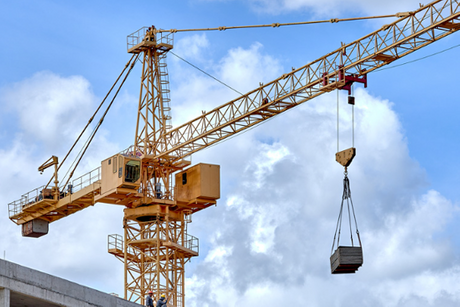
For decades, the hoist tower has served as the backbone of vertical transportation on high-rise construction sites. Acting as the structural spine for safe and efficient lifting, it ensures that materials, tools, and personnel can move between levels quickly and securely. The hoist tower not only streamlines site logistics but also significantly improves productivity and safety management. Fuzhou Guangyitong Mechanical Equipment Co., Ltd. (GYT), a leading manufacturer in China’s National Free Trade Pilot Zone, has dedicated over twenty years to perfecting hoist towers and construction hoists that meet the rigorous demands of modern construction. Built with precision engineering, reliable safety mechanisms, and modular flexibility, GYT’s hoist towers remain an essential choice for complex vertical building projects worldwide.
What is a hoist tower and how it differs from other lifting systems
A hoist tower is a rigid, vertical steel structure that supports hoisting equipment for both material and personnel lifting. It forms a stable framework that enables safe and continuous vertical movement even in demanding site conditions. Unlike cranes or temporary lifts, which may be limited in capacity or precision, a hoist tower delivers steady and controlled transport along a fixed path. Its structure allows it to operate independently from the building itself, while also integrating seamlessly once the structure progresses in height.
In high-rise projects, the hoist tower is typically used with rack-and-pinion-driven construction hoists. This setup combines structural strength with mechanical reliability, making it ideal for fast-paced building environments. The tower remains in place throughout the project, often rising alongside the building’s floors until the very top is reached.
Mast-climbing vs. rack-and-pinion vs. suspended arrangements
Different lifting systems have specific uses, but few can match the versatility of the hoist tower. Mast-climbing platforms are primarily used for façade works or light construction, providing horizontal working decks but limited lift capacity. Suspended platforms depend on wire ropes from roof structures, making them excellent for exterior finishing yet less stable under heavy loads.
Rack-and-pinion systems, on the other hand, rely on a gear-driven mechanism attached to the hoist tower’s mast. This allows for precise movement, strong lifting power, and minimal downtime. While mast climbers and suspended systems offer flexibility, the hoist tower stands out for its strength, stability, and ability to handle large volumes of material and personnel at once. For long-term, high-rise, or heavy-duty projects, it remains the preferred choice among professional contractors.
Design considerations for hoist towers on tall buildings
Designing and installing a hoist tower involves more than simple assembly; it requires detailed engineering, site-specific adaptation, and strict adherence to safety standards. Every high-rise project presents unique challenges, from soil conditions to wind resistance, and a well-designed hoist tower must address each of them.
Foundation and anchorage needs
A hoist tower’s foundation must withstand both static and dynamic loads. It’s typically built on reinforced concrete bases capable of supporting the combined weight of the mast, hoist car, and transported materials. The tower must also resist lateral forces generated by wind or movement during operation. Secure anchorage to the building structure at defined intervals is essential to maintain stability.
GYT’s hoist towers are engineered to accommodate diverse environments, from compact city sites to large open developments. Each tower base is designed for quick assembly while ensuring maximum strength, providing a firm anchor even in areas with uneven ground.
Modular mast segments and extension strategy
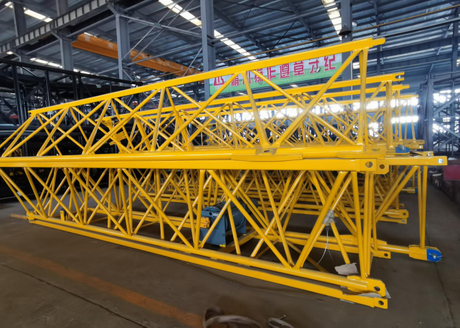
Modularity lies at the heart of a hoist tower’s design. Mast sections can be added or removed to match building progress, minimizing idle time and unnecessary reconfiguration. GYT’s modular segments use precision-engineered joints and corrosion-resistant finishes, allowing for long service life and repeated use. The ability to extend the tower quickly and safely saves both labor time and operational cost, particularly in projects with tight deadlines.
Moreover, GYT integrates intelligent lifting systems that synchronize tower height with building progress, improving operational flow. Each segment undergoes rigorous quality checks to guarantee seamless alignment and structural balance throughout the project.
Operational advantages of a robust hoist tower system
In the modern construction environment, productivity and safety depend on how efficiently teams can move equipment and workers. A strong, dependable hoist tower system can transform daily site operations by reducing delays and increasing workflow continuity.
Load capacity, speed, and continuous operation benefits
GYT’s hoist towers are designed to handle high-capacity loads with consistent performance. Their rack-and-pinion mechanism provides stable movement without reliance on external cables or hydraulic systems. This design allows hoists to operate continuously throughout the day with minimal interruption, even in high-traffic construction environments.
The combination of speed and stability is one of the hoist tower’s greatest strengths. Operators can adjust speeds depending on material type and height, achieving precision and efficiency simultaneously. With proper maintenance, these systems can function smoothly for years, offering dependable service across multiple projects.
Integration with loading platforms and site logistics
An often-overlooked advantage is how effectively hoist towers integrate into the broader logistics of a construction site. When positioned strategically, they connect with loading bays, scaffolding, or façade workstations, enabling a constant flow of resources without congestion.
GYT’s tower systems are designed for seamless adaptation. They can be installed on narrow urban plots or expansive construction sites, maintaining compatibility with a wide range of loading platforms and hoisting accessories. The result is a smoother workflow, reduced waiting time, and enhanced safety coordination between ground-level teams and elevated work areas.
Safety, inspection and lifecycle management for towers
Safety is the foundation of hoist tower operation. As towers carry both materials and personnel, strict maintenance and inspection routines are mandatory to ensure compliance and prevent breakdowns.
Routine inspection points and common failure modes
Routine inspection includes checking anchor bolts, mast joints, rack gear wear, and control circuitry. Small misalignments can lead to operational instability, while improper lubrication can cause gear damage. GYT recommends structured inspection intervals supported by detailed maintenance logs. This approach not only enhances safety but also preserves the system’s long-term reliability.
How GYT builds inspection- and service-friendly towers
GYT has optimized its tower design to simplify service access and routine checks. Components such as drive units, racks, and anchor points are positioned for easy maintenance without extensive disassembly. Electrical systems come equipped with smart fault diagnostics to alert operators to irregularities early. The company’s focus on maintenance-friendly design ensures every hoist tower remains in top working condition, maximizing uptime and minimizing risk.
Upgrades, retrofits and rental vs. purchase decisions
Investment decisions surrounding hoist towers vary depending on project scope, budget, and duration. GYT offers flexible pathways for ownership, leasing, and upgrading, helping clients balance performance with practicality.
When to rent a hoist tower for short projects
For short-term construction jobs, rental options can provide significant savings. Renting eliminates upfront costs while offering full access to GYT’s installation and technical support teams. This allows smaller contractors or time-limited projects to maintain professional-grade vertical lifting without long-term investment.
Upgrade paths: higher capacity, automation-ready controllers
For long-term partners or major developers, upgrades are an efficient way to extend a tower’s lifespan. GYT provides retrofit solutions that include enhanced drive motors, reinforced mast sections, and automation-ready control systems. With these upgrades, clients can achieve better energy efficiency, smoother operation, and digital monitoring capabilities. This adaptability allows GYT towers to remain relevant even as technology and building requirements evolve.
Conclusion
The hoist tower continues to stand as the most reliable and adaptable system for vertical transportation in modern high-rise construction. Combining high capacity, modular design, and long-term durability, it supports the efficient flow of materials and workers while ensuring maximum safety and stability. Backed by over two decades of engineering expertise, Fuzhou Guangyitong Mechanical Equipment Co., Ltd. (GYT) offers tower systems that meet global standards for performance and safety. For contractors seeking proven lifting technology that keeps projects on schedule and on budget, GYT’s products deliver consistent reliability and value. To learn more about our advanced construction hoist systems, please contact us for technical details, quotes, or consultation on your next project.
FAQ
1. What is the main advantage of using a hoist tower in high-rise construction?
A hoist tower provides continuous, reliable vertical transport for both personnel and materials, improving efficiency and reducing project delays compared to cranes or temporary lifts.
2. How does GYT ensure the safety of its hoist tower systems?
GYT applies rigorous quality control, high-grade materials, and integrated safety devices such as emergency brakes, overload protection, and fault monitoring to guarantee safe operation.
3. Can GYT customize hoist towers for specific site conditions or building types?
Yes. GYT designs modular systems that can be tailored for various building heights, load requirements, and environmental factors to ensure precise adaptability to any site.
4. What are the benefits of upgrading an existing hoist tower system?
Upgrading allows users to enhance load capacity, introduce automation features, and improve operational efficiency without replacing the entire structure—extending service life and cost savings.