For many façade and maintenance projects, choosing between scaffolding and a suspended platform can define both the efficiency and safety of operations. Unlike fixed scaffolding that takes up large ground space, suspended platforms hang from the top of a structure, allowing workers to access difficult vertical surfaces with remarkable flexibility. For projects involving façade glazing, window cleaning, or high-rise maintenance, suspended platforms provide a mobile and efficient alternative. Fuzhou Guangyitong Mechanical Equipment Co., Ltd. (GYT) offers a full range of suspended access systems compatible with our construction hoists and accessories, giving project teams a safe, flexible, and reliable way to handle vertical work at height. With more than two decades of engineering experience and clients across Asia, Europe, and South America, GYT continues to innovate suspended access solutions that improve productivity and jobsite safety for complex building projects.
What Is a Suspended Platform and Its Typical Use Cases
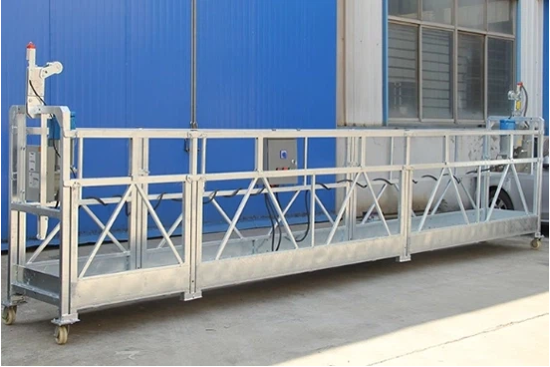
A suspended platform—sometimes referred to as a cradle, swing stage, or gondola—is a temporary structure used to lift personnel and tools along building façades or tall vertical structures. Unlike scaffolding, which is built from the ground up, suspended platforms are hung from the roof using suspension mechanisms such as wire ropes, hoists, and counterweights.
Façade Cleaning, Glazing, External Fit-Out, and Vertical Vessel Maintenance
Suspended platforms are widely used in modern construction and maintenance projects. For example, they are indispensable for glass installation in curtain wall systems, exterior painting, insulation fixing, and window cleaning in skyscrapers. In industrial facilities, suspended platforms support vertical vessel maintenance, inspection of chimneys, and surface repair of tanks—jobs where traditional scaffolding would be inefficient or impractical.
This access method allows crews to work efficiently across a wide vertical span without assembling and dismantling multiple scaffold tiers. GYT’s suspended access systems are designed to integrate seamlessly with hoist towers or construction hoists, creating a complete vertical access ecosystem for construction and industrial users. Their compact modular components make transportation easier, allowing project teams to move the system between different sites quickly, minimizing downtime and improving overall utilization.
Benefits Compared to Scaffolding and Mast-Climbing Platforms
Choosing between a suspended platform, scaffolding, or mast-climbing system depends on project conditions—but suspended platforms often stand out when flexibility and cost-effectiveness matter.
Setup Time, Access Flexibility, and Working Envelope
Scaffolding can take several days or even weeks to erect and dismantle, especially on tall buildings or irregular façades. Suspended platforms, on the other hand, can be installed in a fraction of the time. Their modular design and roof suspension allow workers to reach various elevations quickly without structural adjustments. They are ideal for projects that require frequent repositioning or short-term façade access, reducing idle time and labor costs.
The working envelope is another key advantage. A suspended platform can travel vertically along the entire height of a structure, providing smooth access from the roof to the ground without intermediate platforms. Operators can precisely control positioning through electric hoists, making it perfect for detailed or repetitive façade work. The lightweight yet durable design also reduces stress on building structures, a benefit when working on older façades or restoration projects.
Cost vs. Repeated Scaffold Mobilization
Repeated scaffolding mobilization—erecting, dismantling, and moving it from section to section—adds up to significant costs and time losses. A suspended platform eliminates these inefficiencies. Once the suspension points are in place, crews can reuse the same system for multiple façades or maintenance zones. This makes it a cost-efficient choice for ongoing maintenance contracts or buildings with frequent façade work.
GYT’s suspended platforms use durable steel structures and high-quality electrical hoists that minimize maintenance and maximize uptime. With their quick setup and adjustable spans, they support project teams under tight deadlines or constrained budgets. For construction managers seeking both flexibility and reliability, suspended systems represent a long-term investment that reduces operational complexity over the entire lifecycle of a building.
Safety Systems and Certifications for Personnel Platforms
Safety is the foundation of every suspended access operation. A professional-grade system includes redundant safety mechanisms, certified components, and proper operator training to ensure reliable performance at height.
Arrest Systems, Hoists on the Platform, and Redundancy
Modern suspended platforms are equipped with dual steel wire ropes: one for load bearing and one for safety backup. Safety locks and fall arrest devices engage automatically if the main rope loosens or fails. Each platform is fitted with electric hoists that feature braking systems, overload protection, and manual descent capabilities for emergency lowering.
GYT’s platforms are built to meet international standards, featuring galvanized steel structures for durability and high-strength suspension ropes tested for dynamic loads. Redundancy in design ensures that even if one system component fails, others continue to protect workers. Continuous improvements in manufacturing and inspection ensure that every GYT system adheres to strict safety norms demanded by leading construction companies worldwide.
Regulatory Checkpoints and Operator Training
Before any operation, safety inspections must verify the condition of hoists, ropes, suspension beams, and counterweights. National and international regulations—such as CE, ISO, or GB standards—require documented maintenance and operator training. GYT supports clients with technical documentation, on-site setup guidance, and operation manuals to ensure compliance and safe handling of every unit. Regular refresher training helps crews stay updated on best practices for safe suspended platform use, further reducing risk on site.
Selecting the Right Suspended Platform Configuration for Your Job
Not all suspended access jobs are the same. Selecting the correct configuration helps match performance, safety, and cost.
Span, Load, and Power Requirements
The platform span determines how much façade area can be covered in one pass. Typical systems range from 2 to 10 meters, but custom sizes are possible for larger façades. Load capacity varies depending on crew size, tools, and material weight—usually between 250 kg and 800 kg. GYT engineers help clients match the platform design with hoist lifting power and voltage options to suit site conditions.
Electric hoists powered by three-phase systems ensure smooth lifting and descent, while overload limiters protect against excessive loads. By balancing these parameters, users can ensure stable operation and efficient productivity. The adaptability of these systems makes them ideal for varied project environments—from urban high-rises to industrial tanks and offshore structures.
Roof Anchorage and Counterweight Options
The roof suspension system anchors the platform safely to the structure. Counterweight-based systems are ideal for flat roofs, while parapet clamps or beam sleeves work better for more complex rooftops. Adjustable outreach and tilt features provide flexibility for different façade geometries.
GYT provides a variety of anchorage and counterweight solutions compatible with both temporary and long-term installations. All suspension components are precision-engineered to resist fatigue and corrosion, guaranteeing operational reliability over years of use.
How Suppliers Support Suspended Platform Projects
Beyond equipment itself, dependable supplier support ensures safe and efficient operation throughout a project’s life cycle.
On-Site Commissioning and Routine Inspection Programs
Professional suppliers assist during the initial setup and commissioning phase. This includes verifying correct assembly, cable tension, and platform leveling. Routine inspection programs—covering electrical systems, structural integrity, and safety locks—extend platform life and reduce downtime.
GYT offers on-site guidance and preventive maintenance programs for clients in construction, energy, and infrastructure sectors. With decades of manufacturing experience, our technicians help teams meet project deadlines safely while maintaining compliance with industry regulations. The company’s service teams also assist with reconfiguration and spare part replacement, ensuring minimal disruption during project transitions.
Quick Replacement Parts and Lifecycle Planning
Even the best-engineered platforms need periodic servicing. Availability of spare parts, such as control boxes, wire ropes, or safety locks, determines how fast a system can return to service after maintenance. GYT maintains a full inventory of replacement parts and provides detailed lifecycle planning, helping contractors forecast maintenance intervals and costs.
By integrating spare parts, training, and inspection programs into one service ecosystem, GYT ensures that every suspended platform remains in optimal condition for years of operation. This proactive support not only safeguards productivity but also enhances long-term value for contractors and developers investing in quality access equipment.
Conclusion
When façade work, maintenance, or glazing projects require speed, flexibility, and cost efficiency, GYT’s suspended platform offers clear advantages over traditional scaffolding. GYT’s integrated system—combining suspended platforms, hoists, and professional service—provides a complete solution for high-rise and industrial applications. With a focus on safety, durability, and technical support, Fuzhou Guangyitong Mechanical Equipment Co., Ltd. helps clients elevate their vertical access operations efficiently and reliably. For tailored solutions, spare parts, or assistance in project setup, contact our team today to learn more about our suspended access systems.
FAQ
Q1: What is the main difference between a suspended platform and scaffolding?
A suspended platform hangs from the roof using wire ropes and hoists, while scaffolding is built from the ground up. The suspended system provides faster setup and greater flexibility for vertical work.
Q2: How safe are suspended platforms for façade maintenance?
They are equipped with multiple safety systems—such as dual wire ropes, safety locks, and overload protection—to ensure operator safety, provided they are inspected and operated correctly.
Q3: Can a suspended platform handle heavy tools and materials?
Yes. Depending on the model, load capacities can range from a few hundred to over eight hundred kilograms. GYT engineers can tailor the platform configuration to suit your project’s needs.
Q4: Does GYT provide after-sales service for suspended platforms?
Absolutely. GYT offers full technical support, spare parts supply, and routine inspection programs to keep suspended platforms performing safely and efficiently throughout their lifecycle.