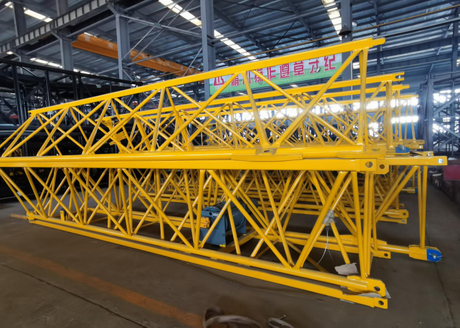
How can a tower crane rise above a building before the building exists? It is not lifted in one piece. It is built step by step. In this article, you will learn how tower crane erection works, what must be prepared, and why each safety check matters.
Key Takeaways
●A tower crane is erected through a planned sequence, not a quick lifting job. The process includes foundation work, base fixing, mast assembly, slewing unit installation, jib lifting, counterweight placement, wiring, testing, and commissioning.
●The foundation is one of the most important parts. If the base is not level, stable, and matched to the crane design, the whole structure can face safety risks.
●Crane type affects the erection method. A topkit tower crane, flat top tower crane, mini tower crane, and self-erecting crane may need different lifting space, assembly steps, and assist equipment.
●Climbing or jacking allows a construction tower crane to grow higher as the building rises.
●Final load testing, limiter checks, and operator handover are required before normal lifting work begins.
What Must Be Ready Before Tower Crane Erection?
Tower crane erection starts long before the first mast section arrives. A site team must check the lifting zone, ground condition, truck access, nearby buildings, power lines, and the path for unloading large components. If the job site is narrow, the lifting plan becomes even more important because the assist crane also needs space to work safely.
The foundation must match the crane height, lifting capacity, working radius, and site soil condition. Most fixed tower cranes need a reinforced concrete foundation or embedded anchor system. Engineers should confirm the foundation size, anchor layout, concrete strength, and curing time before installation begins. A weak or uneven base can cause alignment problems later.
All components should be inspected before assembly. This includes mast sections, bolts, pins, platforms, ladders, slewing unit, cab, jib sections, counter-jib, trolley, hook block, hoist rope, control cabinet, and limit switches. Any bent steel member, missing pin, damaged weld, or worn rope should be addressed before lifting starts.
Weather also matters. Strong wind can make long jib sections swing during lifting. Poor visibility can make hand signals unclear. Rain can affect footing, electrical work, and rigging safety. For this reason, erection should follow a clear weather window and a written method statement.
Tip:Confirm foundation drawings, anchor positions, and component lists before delivery to reduce site delays.
How Is a Tower Crane Erected Step by Step?
The basic erection process starts with the base. Workers first position the base frame or anchor system on the prepared foundation. They check levelness and alignment because every mast section above depends on this first step. Even a small base error can grow into a major verticality issue.
Next, the first mast section is installed. A mobile crane usually lifts it into place. Workers connect it to the base using high-strength bolts or pins. Then more mast sections are added until the crane reaches its initial free-standing height. Each connection must be tightened, locked, and checked before the next section is lifted.
After the tower body reaches the planned height, the slewing unit is installed. This part allows the upper crane structure to rotate. It is a critical connection point between the vertical mast and the working assembly above. The slewing mechanism must be positioned carefully because it controls the crane’s rotation during lifting work.
The operator cab and upper structure are then installed. In a topkit tower crane, the tower head and tie structure may be lifted next. In a flat top tower crane, the upper structure is usually simpler because there is no tower head. This difference can affect assembly time and overhead clearance.
The counter-jib is installed before the main jib in many erection sequences. It supports machinery, hoisting systems, and counterweights. Temporary or partial counterweights may be added at this stage to help balance the crane during the next lift.
The main jib is usually assembled on the ground first. Workers connect jib sections, trolley rails, and related parts. Then the mobile crane lifts the full jib or large jib section into position. This is one of the most visible stages of tower crane erection because the long horizontal arm starts to define the crane’s working range.
Final counterweights are then installed according to the approved sequence. Wire ropes are reeved through the hook block and hoisting system. The electrical system is connected. The trolley travel, hook height, slewing movement, brakes, and limiters are checked. Only after testing can the crane be prepared for service.
Note:Counterweights must follow the approved sequence because wrong timing can affect crane balance.
How Does a Tower Crane Climb Higher?
A tower crane does not always reach its final height during the first erection. On high-rise projects, it may climb as the building grows. This process is often called climbing or jacking. It uses a climbing frame to raise the upper crane structure so another mast section can be inserted below it.
During climbing, the crane must be balanced carefully. The jib and counter-jib must stay in the correct position. Wind conditions should be controlled. Workers insert the new mast section, secure it, and check all connections before the next lift. This process can be repeated many times.
For very tall projects, the crane may also be tied to the building. Wall ties or anchoring frames connect the mast to the structure. This gives the crane more stability at greater heights. The tie-in design depends on building height, crane load, mast strength, and engineering requirements.
Climbing is a precise job. It should never be treated as routine lifting. The crew must follow the crane manual, approved method statement, and site safety plan. A missed bolt, wrong balance point, or poor communication can create serious risk.
What Equipment Is Used to Erect a Tower Crane?
A mobile crane or crawler crane is often used for the first erection stage. It lifts mast sections, slewing units, jib parts, counter-jibs, and counterweights. The assist crane must have enough capacity at the required lifting radius. A heavy part may look easy to lift, but the radius often decides whether the lift is safe.
Rigging tools are also important. Slings, shackles, lifting beams, tag lines, torque tools, and fall protection equipment are used throughout the job. Tag lines help workers control long parts during lifting. Torque tools help confirm bolt tightness. Clear radio communication helps the operator follow the rigger’s signal.
Electrical tools and testing devices are needed near the end of the process. Workers check the control cabinet, motor systems, brakes, limit switches, warning devices, and emergency stop functions. They also confirm the crane responds correctly from the cab and control system.
Here is a simple summary of common erection equipment:
Equipment
Main Use During Erection
Mobile crane or crawler crane
Lifts tower crane components into place
Slings and shackles
Connect parts to the lifting hook
Tag lines
Control swinging during lifting
Torque tools
Tighten and verify bolts
Testing devices
Check electrical and safety systems
Fall protection gear
Protect workers at height
Tip:Choose the assist crane based on lift weight, radius, and site access, not only on rated capacity.
What Safety Checks Are Required After Erection?
After the tower crane is assembled, the team must inspect the whole structure. They check mast bolts, pins, platforms, ladders, guardrails, jib connections, counterweight locks, cab access, and wire rope condition. These checks confirm the crane is safe for the next stage.
Load testing comes next. The goal is to confirm that the tower crane can lift within its rated range and that protection systems react correctly. The team should test the overload protection system, load moment limiter, trolley travel limiter, hook height limiter, slewing brake, hoisting brake, and emergency stop.
The operator also needs a clear handover. This includes load charts, inspection records, maintenance points, emergency steps, communication rules, and daily checklists. A safe erection process can still fail if the crane is used without proper handover.
Daily inspection matters after commissioning. Operators should check brakes, limiters, wire ropes, hooks, control response, warning alarms, and weather conditions before lifting. A tower crane works under changing site conditions, so safety checks must continue through the whole project.
How Tower Crane Type Affects the Erection Method
Different tower crane types need different erection planning. A topkit tower crane usually has a tower head and tie structure. This can provide strong lifting performance and reach, but the upper structure may require more assembly steps. It is often selected for projects that need stable lifting at height.
A flat top tower crane has no tower head. This can help on sites where several cranes work near each other. It can also reduce overhead interference during erection and operation. For dense urban projects, this design can make crane layout easier.
A mini tower crane or small tower crane may suit sites with limited space. It can help with lighter lifting tasks, smaller building projects, or narrow work zones. Its erection process may still require planning, but transport and assembly space can be easier to manage than a larger construction tower crane.
A self-erecting tower crane follows a different idea. It is designed to reduce erection time and support faster site setup. It may suit projects where mobility, quick installation, and repeated relocation matter. Still, it must be installed on stable ground and checked before use.
The right choice depends on load demand, hook height, lifting radius, site space, project duration, and budget. A crane with more capacity is not always the best option. The best crane is the one that fits the site and the lifting plan.
Common Problems During Tower Crane Erection
Poor foundation preparation is one of the biggest problems. If the concrete is not ready, the anchors are misplaced, or the base is not level, the crane cannot be safely erected. Fixing these errors after delivery can delay the entire project.
Another common issue is wrong assembly sequence. Some parts must be installed before others to keep balance. Counterweights, jib sections, and mast sections must follow the approved order. Skipping a step can create instability during lifting.
Wind is another major risk. Long jib sections can swing like a sail. Even experienced riggers may struggle to control large components when wind rises. If weather exceeds the allowed limit, the erection should stop.
Communication failures can also cause problems. The operator may not see the full lifting zone. Riggers, signal persons, and supervisors must use clear commands. Radios should be tested before work starts, and one signal person should control the lift.
GYT Tower Crane Products and Service Support
GYT supplies construction machinery for lifting and access work, including tower cranes, construction hoists, suspended platforms, scaffolding systems, steel props, and spare parts. Its tower crane range includes Topkit Tower Crane, Flat Top Tower Crane, Mini Tower Crane, and tower crane spare parts for construction lifting needs. These options support projects that need stable lifting, high load handling, wide reach, and efficient material movement on building sites. For project-specific needs, GYT also supports customized colors, corporate logos, customized sizes, and professional design. Its service process includes demand analysis, customized design, material selection, production preparation, quality inspection, delivery, assembly, debugging, online installation guidance, and technical support. You can visit the Custom page or use the Contactpage to discuss crane selection, delivery, installation guidance, and product support.
Conclusion
A tower crane is erected through careful planning, foundation work, mast assembly, jib installation, counterweight setup, testing, and safe handover. GYToffers tower crane options for stable lifting, strong reach, and construction efficiency. Its customization, installation guidance, and technical support help projects choose equipment that fits real site needs.
FAQS
Q: How is a tower crane erected?
A: A tower crane is erected section by section, then tested before use.
Q: Why does a tower crane need a strong foundation?
A: A tower crane needs it to stay level, stable, and safe.
Q: What lifts the tower crane parts?
A: A mobile crane usually lifts the main parts.
Q: How does a tower crane get taller?
A: It climbs by inserting new mast sections.
Q: Is a flat top crane easier to erect?
A: It can be easier where overhead space is limited.
Q: What affects erection cost?
A: Height, site access, crane type, labor, and assist equipment.